The course work that resonated most
with me this week is the work by Professor Geneva Gay. In the video, Introduction to Culturally Relevant Pedagogy , Professor Gay identifies two different
kinds of culture; the visible, or tangible and the invisible or intangible. She
describes tangible culture as the art, music or language of that culture,
whereas the intangible is the values, beliefs and assumptions of that culture.
She highlights a dilemma we have in
culturally responsive teaching. She states there is an incompatibility between
the cultural filters that we use as teachers to send messages through the
school’s frame of reference, and the cultural filters that children from different
ethnic backgrounds are using when they are trying to receive those messages so
they can learn.
The part of her work that I find myself reflecting on the most, is where she says it’s time for schools to adapt the way we are planning and presenting messages, to make them more culturally inclusive, rather than expecting students to try and make sense of it, as has been the way traditionally. Our school is multicultural. We have 40% Maori students. The other ethnicities represented in our school are Tokelauan, Chinese, Korean, South African, Samoan, Fijian, Japanese Philipino, Irish, English, Polish, Scottish and Australian. If we are to follow Professor Gay’s directive, a wide range of strategies will need to be employed to meet the needs of this diverse group of students.
The part of her work that I find myself reflecting on the most, is where she says it’s time for schools to adapt the way we are planning and presenting messages, to make them more culturally inclusive, rather than expecting students to try and make sense of it, as has been the way traditionally. Our school is multicultural. We have 40% Maori students. The other ethnicities represented in our school are Tokelauan, Chinese, Korean, South African, Samoan, Fijian, Japanese Philipino, Irish, English, Polish, Scottish and Australian. If we are to follow Professor Gay’s directive, a wide range of strategies will need to be employed to meet the needs of this diverse group of students.
·
The establishment in 2016 of an 'Action Plan for
Raising Achievement for Māori Males'.
·
Programmes to build learning partnerships with
parents and whānau in reading and writing.
·
A 'Kawenata' memorandum of agreement between Ngāti
Tuwharetoa and the school.
·
Accelerating Learning in Mathematics (ALiM), the
Mahi Tahi initiative, and digital mathematics challenge.
·
Using Hautu review – A Maori Responsiveness Self
review designed to ensure we are working as well as we can for our Māori
students as expressed in Ka Hikitia.
Using Pohatu’s (2011) Mauri model, I would
place our school as mainly Mauri Oho – in a state of being proactive – while moving
purposefully into Mauri Ora – actively engaged, commited and motivated. Most of
us also incorporate meaningful culturally inclusive learning activities into
our programmes through reo, art, tikanga, pepeha and waiata. We honour our
commitment to the Kawanata through professional development and meaningful
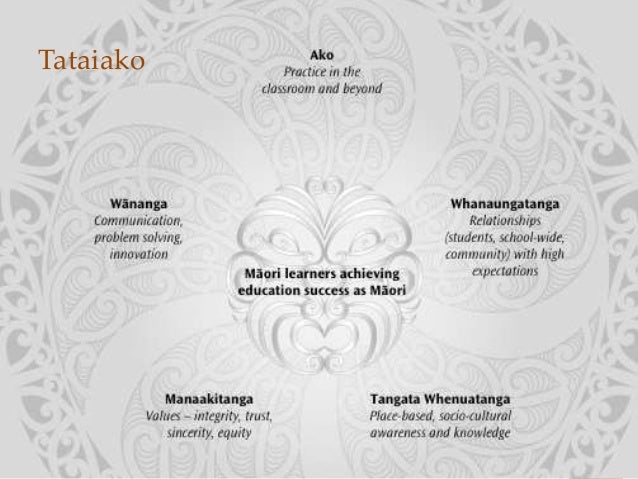
learning opportunities. We honour the Tataiako Competencies as we provide these
meaningful experiences.
Schoolwide, our principal leads a cultural focus
every week at assembly where we fly the flag of one of the different nationalities
within our school and find out facts about them. When possible the students
from those countries are involved. We use an itranslate app on the ipad for our
esol students. We welcome all new students and their whanau each term with a
powhiri. We have a Matariki Week throughout our school, which culminates in a
whanau hangi, prepared and celebrated by students, whanau and the school. We
visit local marae and learn about our
local stories and culture. We have senior and junior kapa haka groups,
involving hundreds of students, staff, tutors and whanau. Our school is well
signposted in both languages.
We are a future focussed school committed to success for all.
We are a future focussed school committed to success for all.
ERO
review. Retrieved from http://www.ero.govt.nz/review-reports/taupo-school-22-11-2016/
Gay,G. (2002). Preparing for culturally responsive teaching. Journal of Teacher Education, 53(2),106-116.
Education Council. Tataiako. Retrieved from: https://educationcouncil.org.nz/sites/default/files/Tataiako.pdf

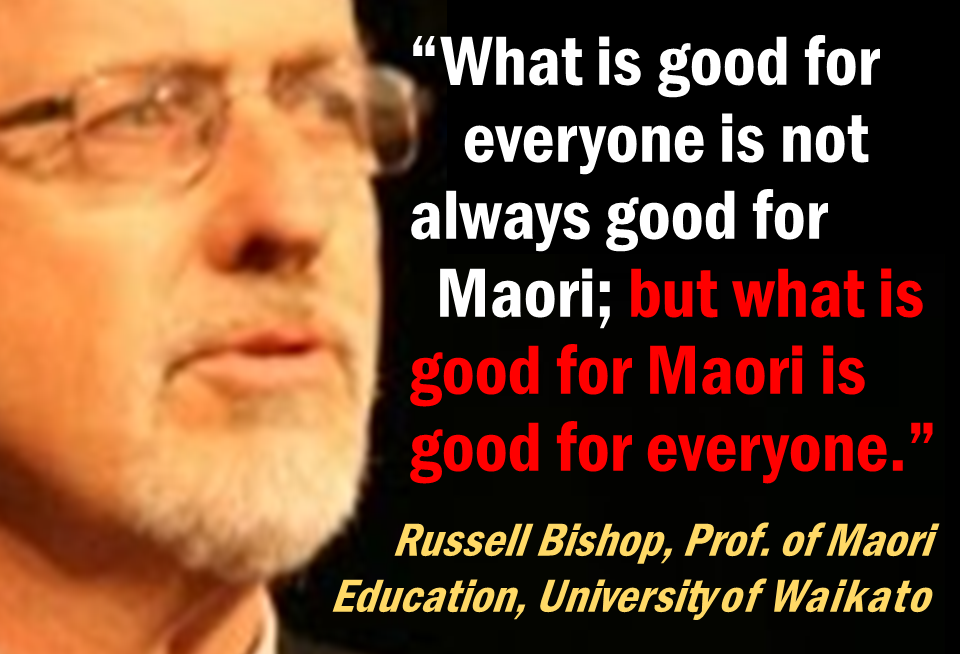
I really enjoyed reading this post Jenny. It is great that your school is at the Mauri Oho phase (Pohatu’s (2011) Mauri model) with the reo, art and waiata. If ERO commented on it, then you certainly know you are on the right track. I like the balance you have recorded with reference to Maori tikanga along with components of other cultures and countries. You’re right in that all cultures need to be honoured so our learners can be in the best place for them to grow and develop, not only as learners, but as people. Russell Bishop, in his video (2012, September 23) commented that is it our responsibility, as teachers, to creating caring relationships to ensure students are able to learn, yet to remember that students are not representatives of a culture, they are individual students with individual needs. Your blog reads like that is a priority for you and your school, good work.
ReplyDeleteHi Jenny! One thing I really enjoy about reading these blogs is how everyone manages to represent their own unique perspective. I like your particular reference to making messages to students more culturally inclusive rather than expecting them to make meaning themselves. To my mind, this comes down to relationship building - such an important part of having a culturally responsive pedagogy. Perhaps it will become more important for us to help our students build the skills to question and make meaning from the messages (or tasks) they are getting, rather than directly helping them. I guess how we might do that is by taking into account their unique perspectives and values, helping them to use this to make their own meaning. Wow - that is no easy feat!
ReplyDelete